This is real green energy.
Scroll
Wind energy is growing fast — but every fibreglass blade is a future landfill. The industry built a $50 billion market on a material it structurally cannot recycle, and the problem grows every year.
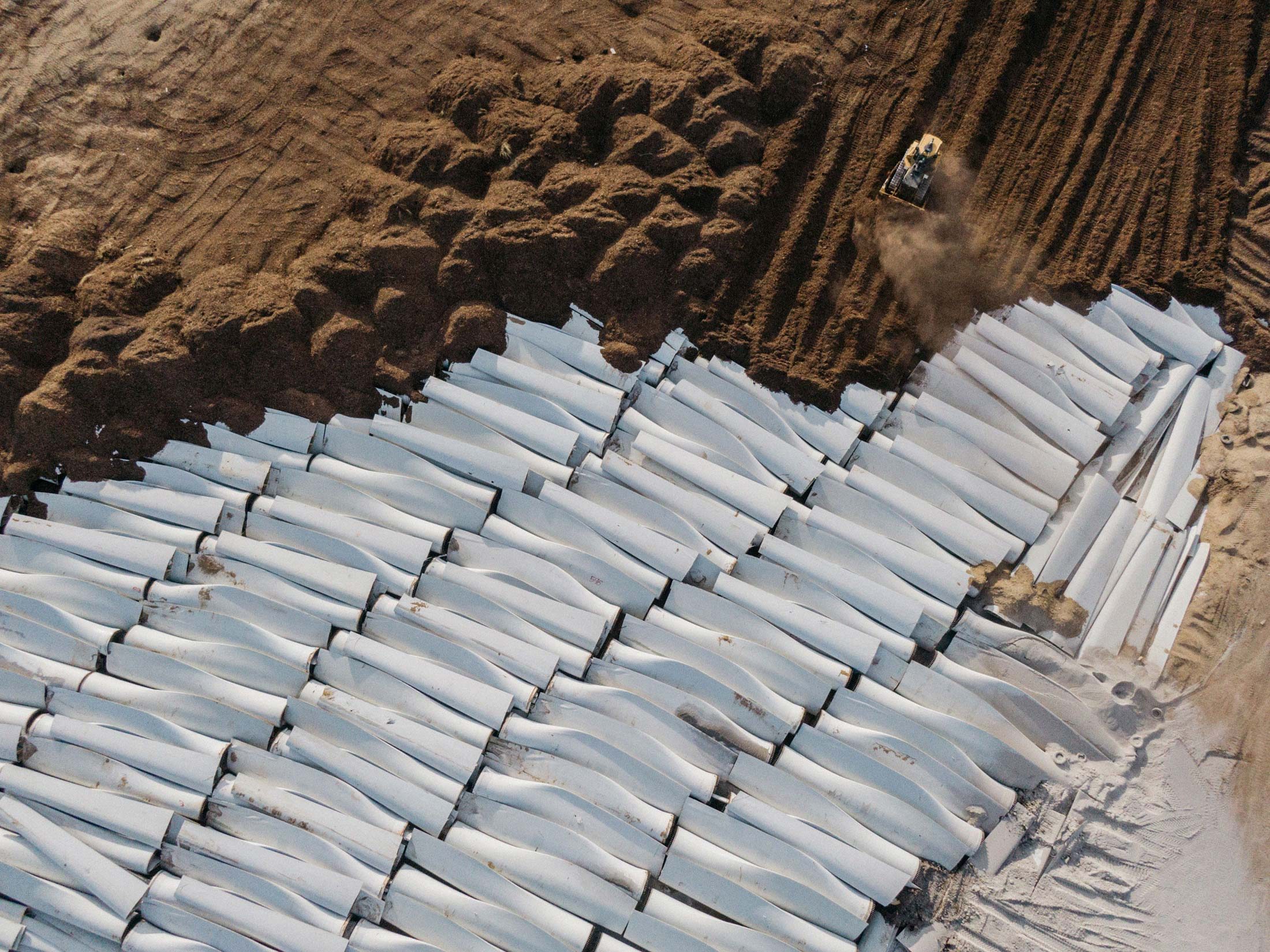
of decommissioned blades are simply buried in the ground.
Wind-blade landfill · Casper, WyomingCumulative decommissioned blade material — and still no circular solution at commercial scale.
Fibreglass composite can't be separated into reusable materials at a viable cost. The OEMs know it, the EU knows it — no one has a scalable fix.
Retire a turbine model and its moulds are scrapped — so owners of ageing turbines can't buy replacement blades at any price.
The preferred choice for structural applications — the strength, dimensional stability and load-bearing capacity a turbine blade needs, from a renewable material instead of fossil-based fibreglass.
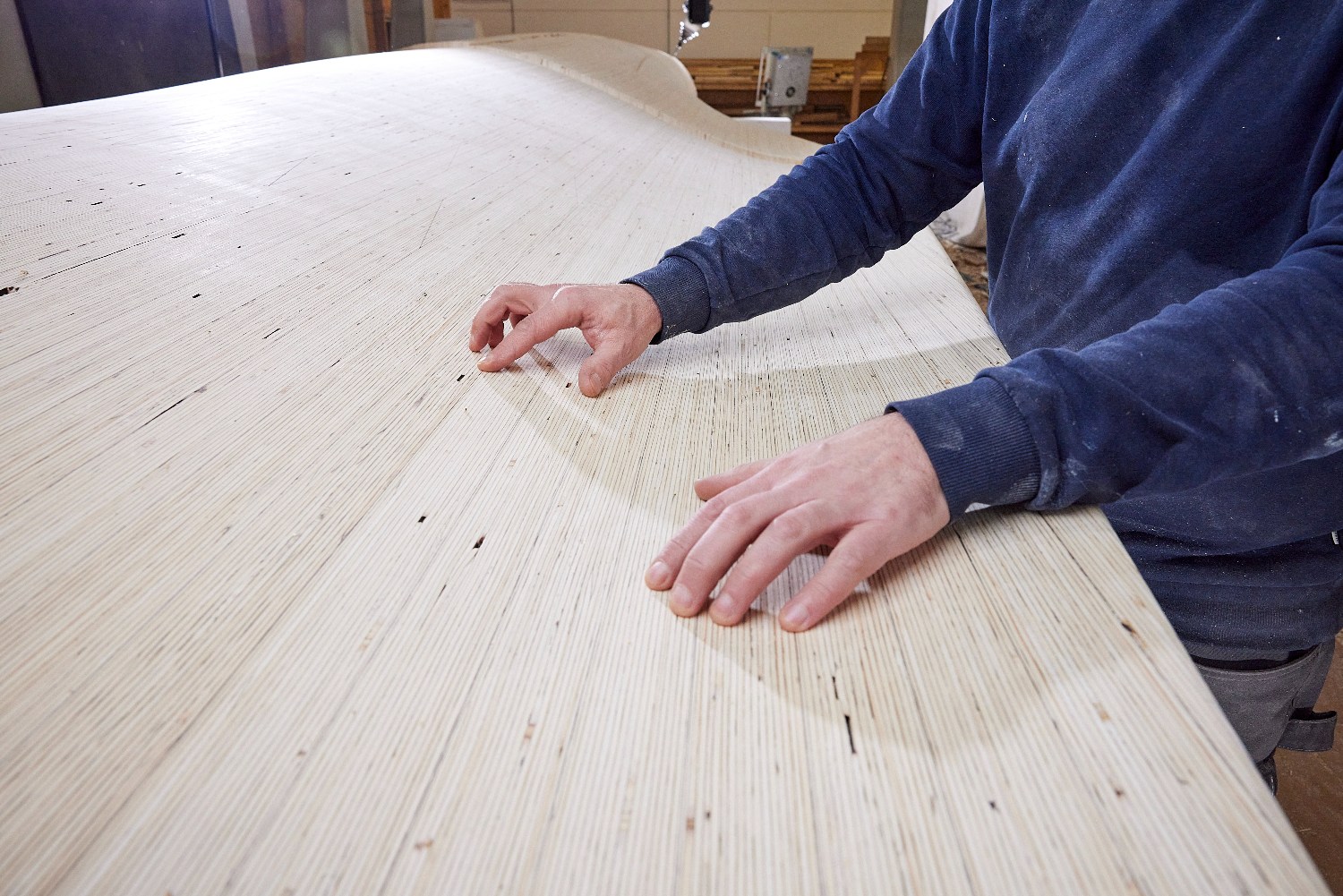

A blade grown from wood, not drilled from oil — a fraction of the carbon to make, and fully recyclable instead of buried at end of life.
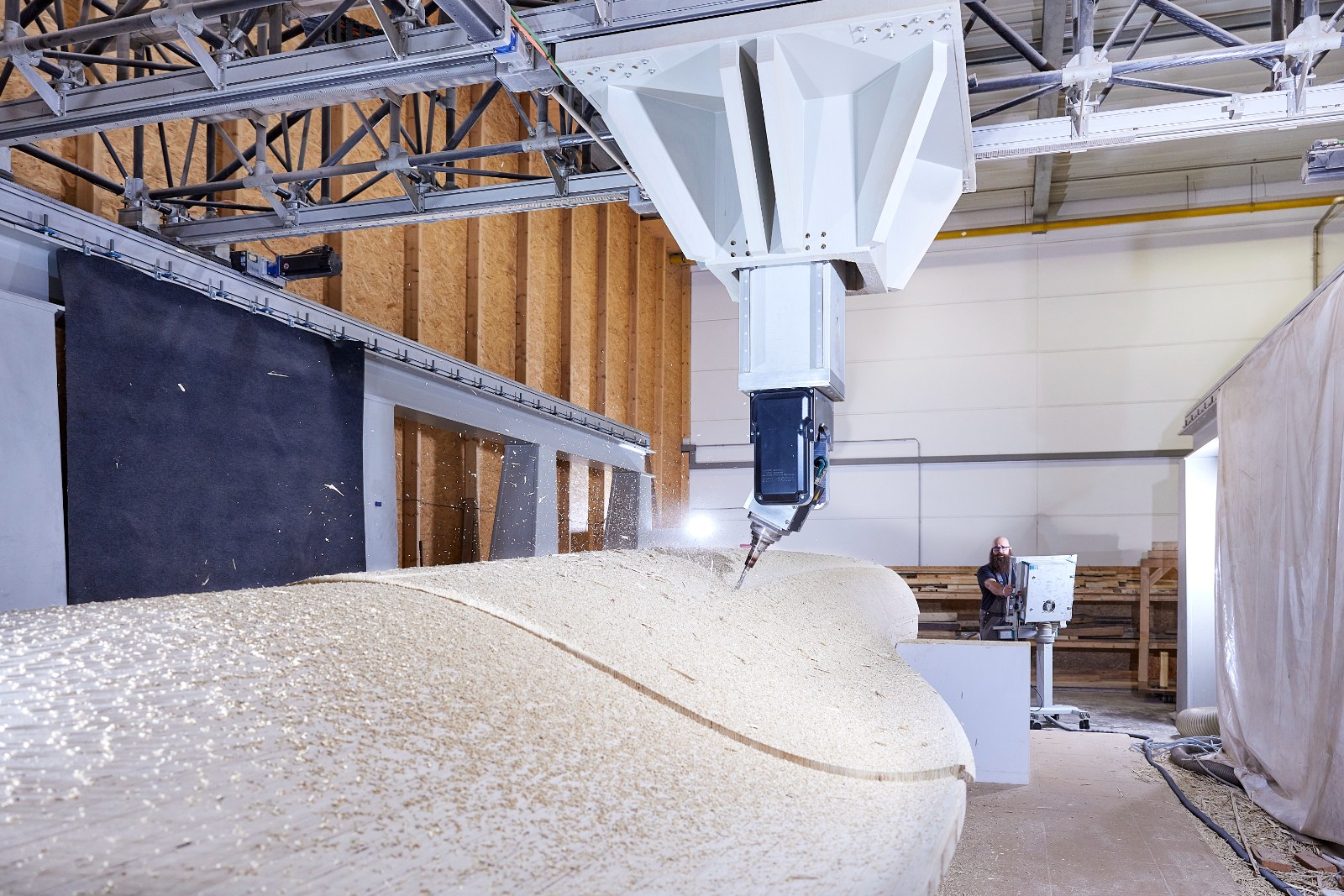
Wooden blades aren't just cleaner — they're easier to build. Milling each blade straight from engineered wood turns a slow, mould-bound craft into a fast, programmable production line.
Dense Nordic spruce, layered and bonded into LVL: the stiffness and fatigue resistance a turbine blade needs, from a material that is renewable rather than fossil-based.
The laminated veneer components are precision-machined to their final aerodynamic profile by five-axis CNC, guided entirely by a digital model instead of a fixed mould. There is nothing to tool up and nothing to retool: a new blade size or design enters production the moment the file is updated — impossible with conventional fibreglass moulds.
It performs like a conventional blade in the field — then, instead of being buried, the wood is fully recyclable and returns to the cycle.
Conventional blades are pressed in giant fibreglass moulds — one per model, each costing millions and scrapped the moment that turbine is retired. A wooden blade is milled straight from a digital design, so there's no mould to build, store or throw away. Change the file and the same line builds for almost any wind project:
Purpose-built for onshore turbines — the backbone of Europe's wind fleet — and weather-rated for onshore loads.
Retire a turbine model and its moulds vanish. We mill replacements from a file, so ageing fleets keep turning.
Short retrofit blades or 90 m+ giants, all on one line. The program changes; the tooling never does.
New geometry is a software change, not a new factory — a fresh design reaches the floor in weeks.